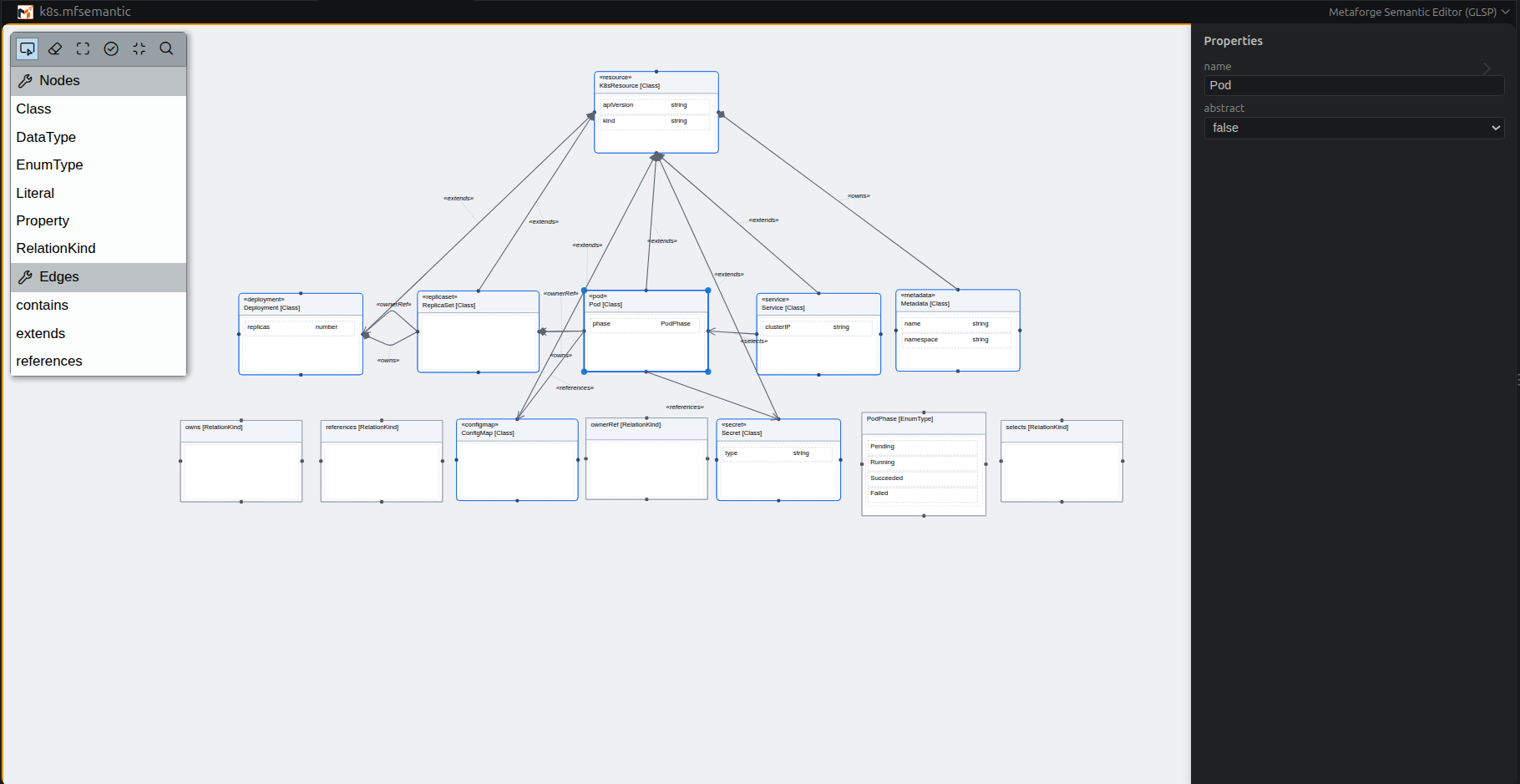
Semantic model
Draw your element types with typed properties (text, number, boolean, date, plus your own enums and datatypes), relationships with ownership/navigability, inheritance, and association classes — the concepts your diagrams are made of.
 metaforge
Everything in the box
From a single declarative language definition you get a complete authoring toolchain and a real, installable diagram editor. Here's the full picture — grouped by what you actually want to do.
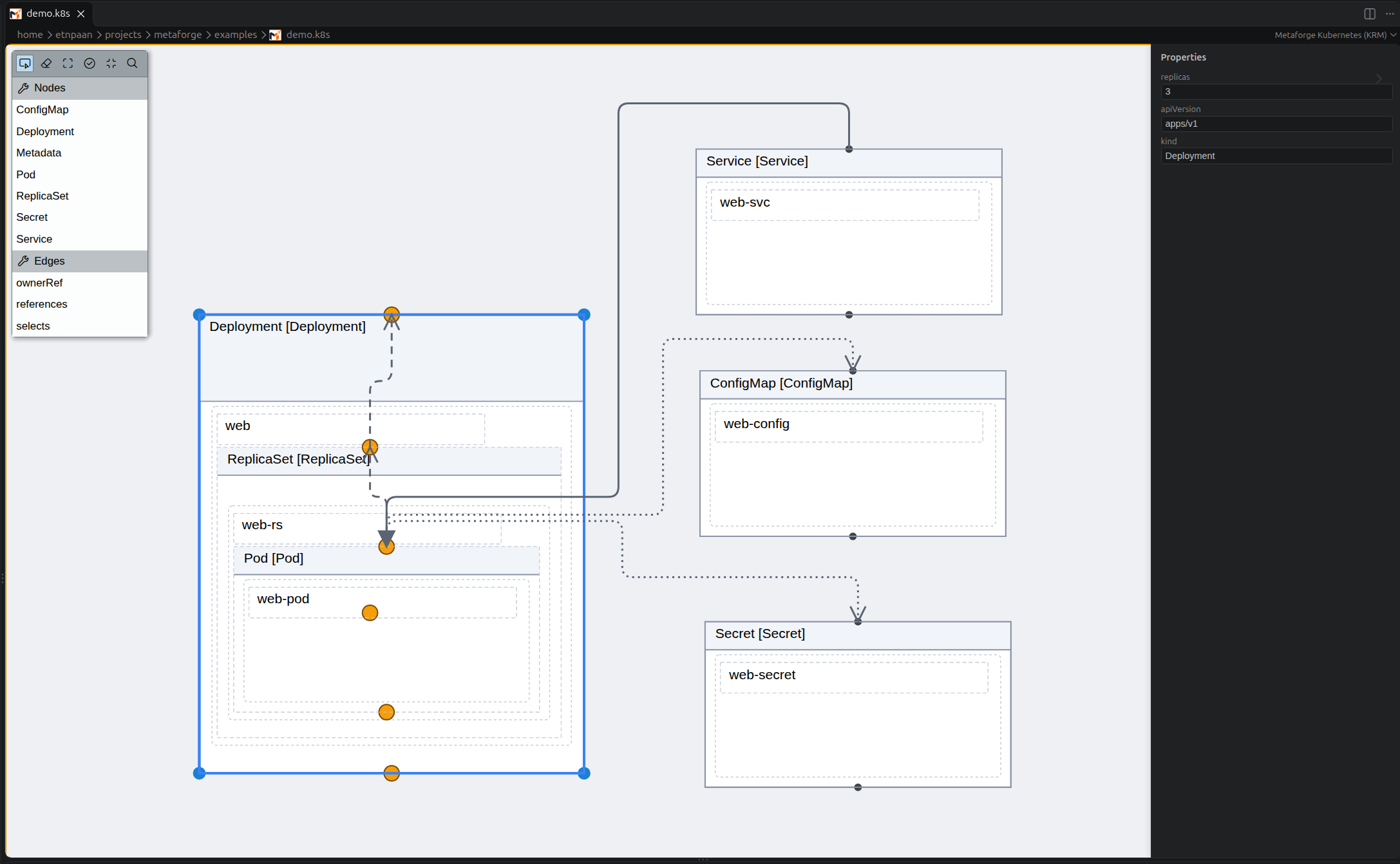
A language is four pieces of declarative data — each with its own editor in VS Code. You design it; metaforge brings it to life.
Draw your element types with typed properties (text, number, boolean, date, plus your own enums and datatypes), relationships with ownership/navigability, inheritance, and association classes — the concepts your diagrams are made of.
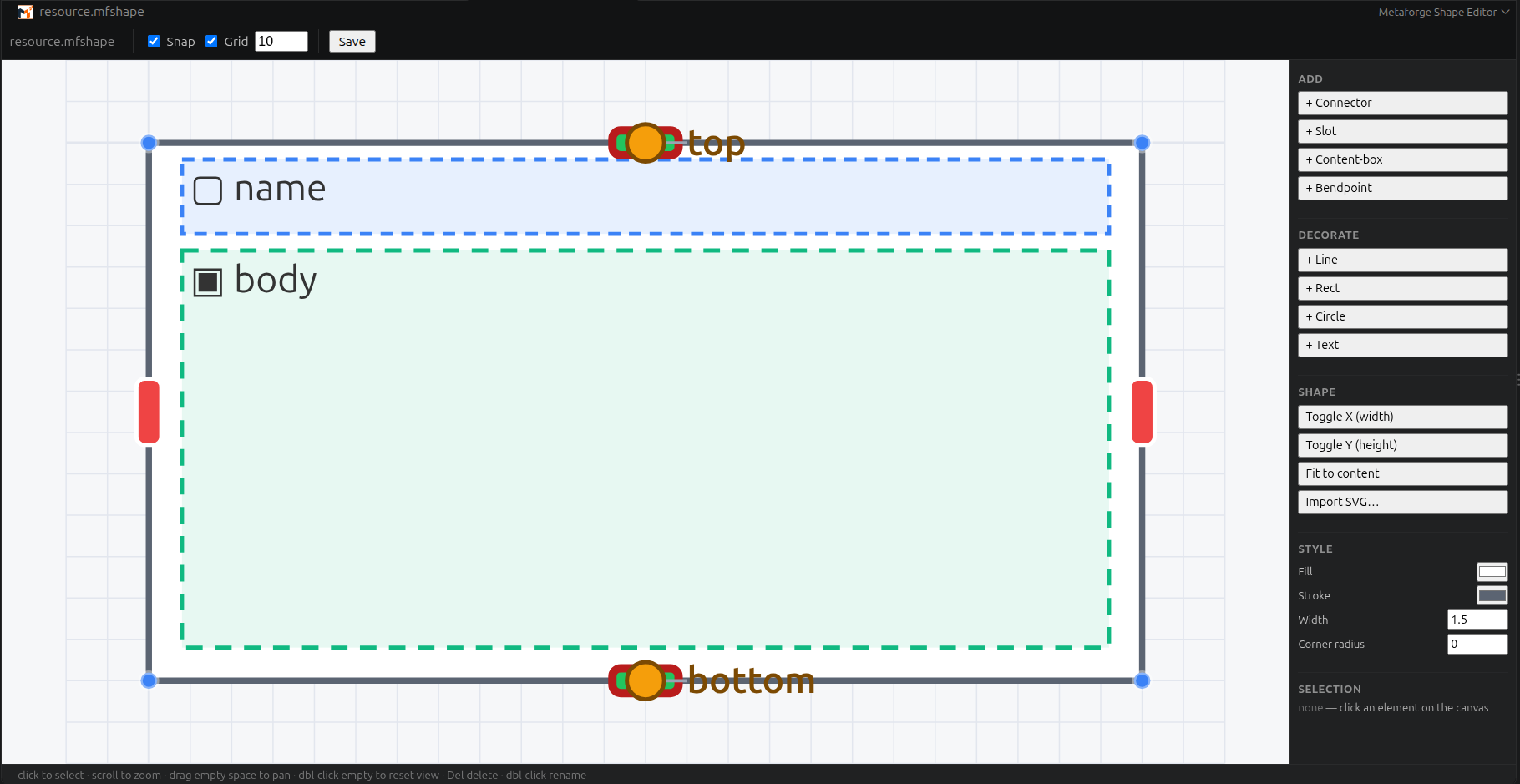
Author each shape as a tagged SVG — draw it in Inkscape or import one. metaforge compiles it into an outline, a content box, and named anchor points for edges and content.
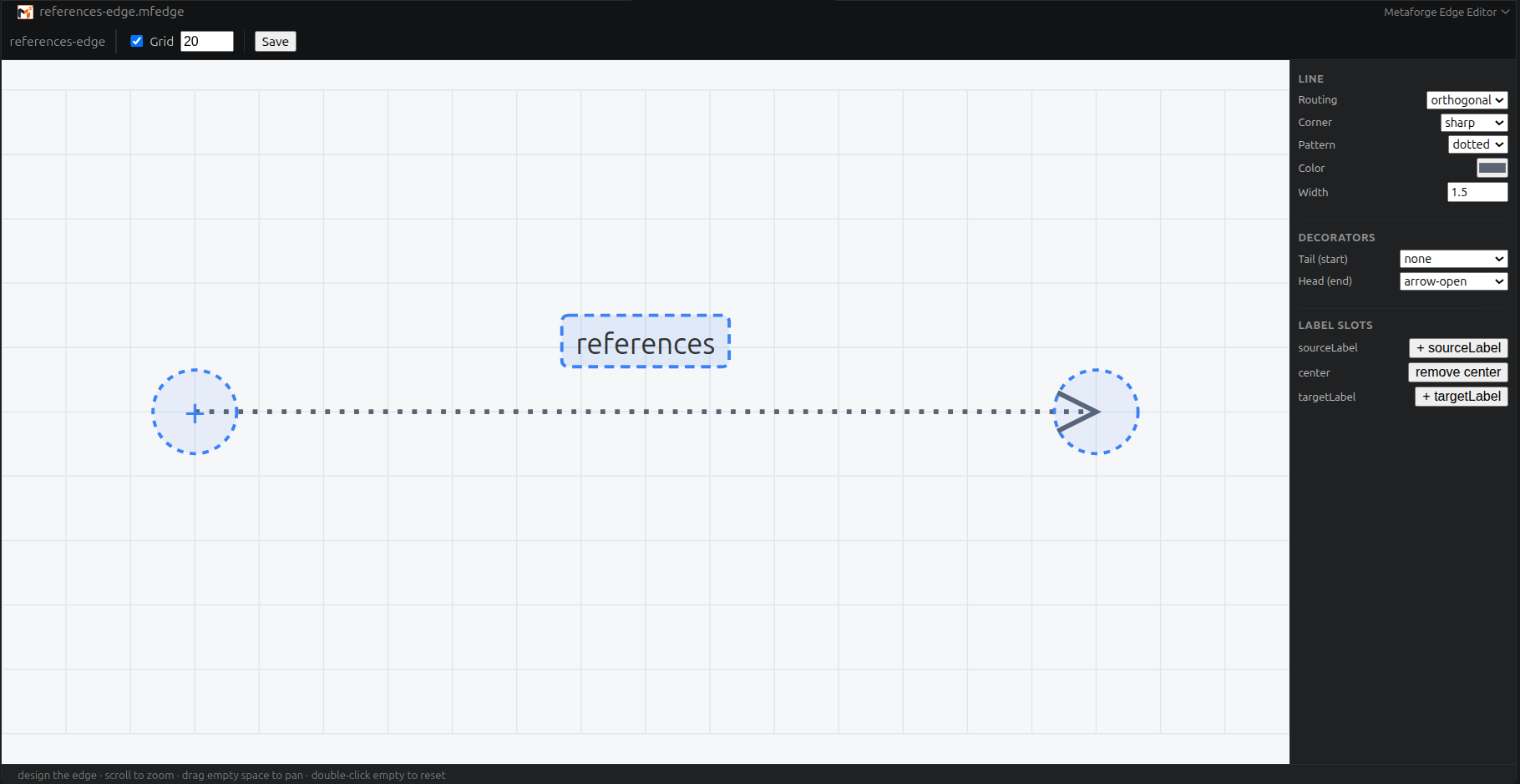
Lines, dashes, arrowheads, diamonds and triangles, routing, and edge labels — describe exactly how each relationship is drawn.
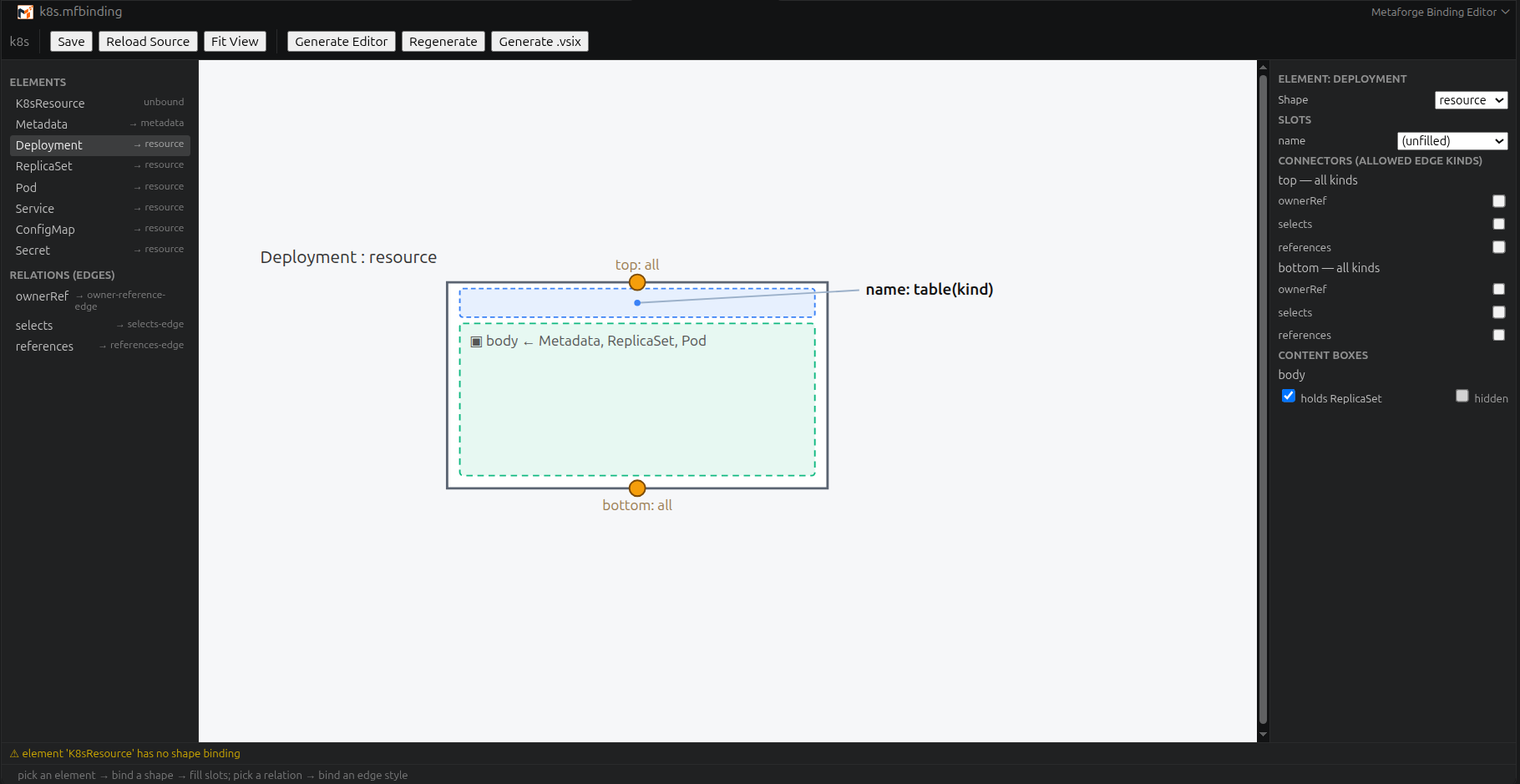
The glue: map each concept to how it looks — element to shape, property to a label or a value-driven colour, relation to an edge style, containment to a content box. Reusable data, so one shape can serve many elements.
Turn your language definition into a complete, self-contained VS Code extension — it bakes in everything it needs, with no runtime dependency on metaforge.
Build an installable .vsix in one step. Hand it to a colleague and it just
runs in any VS Code.
Change the language, regenerate with your saved settings — no re-typing, no editor code to maintain.
The generated editor is a complete diagram tool — and every rule comes straight from your model, so it behaves correctly without a line of hand-written logic.
Drop nodes from a palette built out of your element types; draw relationships as edges where your model allows them.
Drag a node into another where containment is legal; children render inside the parent's content box, empty containers show a compact drop band.
A property panel with the right control for each type — dropdowns for enums, toggles for booleans — plus move, delete, and re-parent, with layout preserved.
assets/screenshots/edit-demo.gif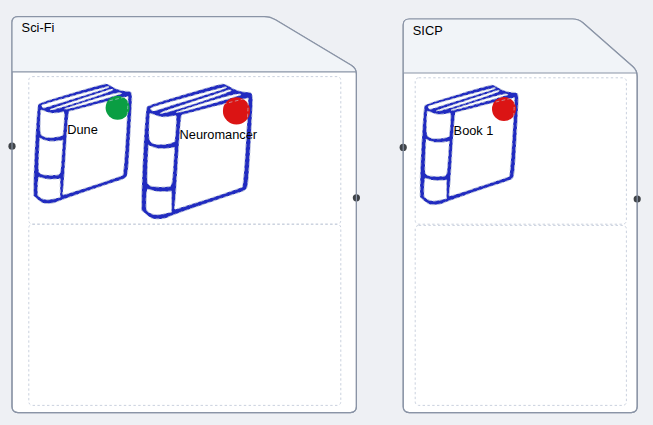
Export any diagram to a readable text form, edit by hand, and load it straight back — lossless and id-stable.
shelf "Sci-Fi" {
  book "Dune"          author: "Herbert"  genre: SCIFI
  book "Neuromancer"   author: "Gibson"   genre: SCIFI
}
shelf "Reference" {
  book "SICP"          author: "Abelson"  genre: TECH
}
Export any model to a human-readable text form and edit it by hand — then load it straight back into the diagram, lossless and id-stable. The grammar is generated from your language, and it works even in a packaged editor.
Seed an editable grammar from your language and change the keywords and structure freely. It's validated live against your model, and your edited grammar drives text-to-diagram.
Every example below runs on the same generic engine with zero language-specific code — the real proof that a language is just data.
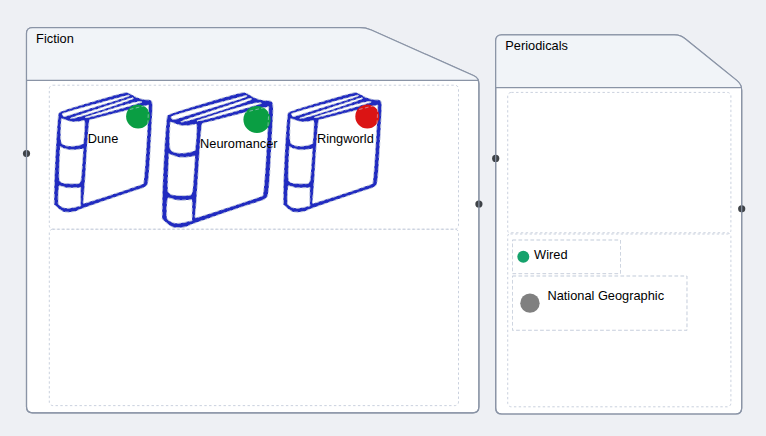
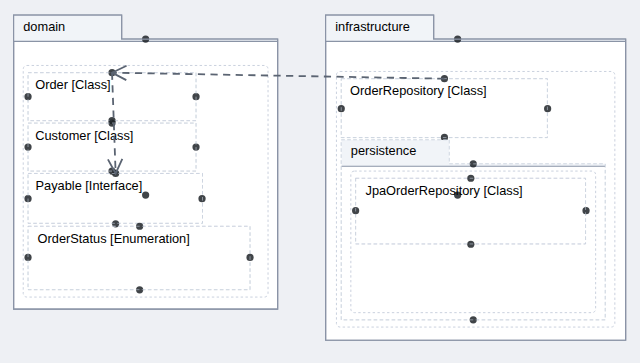
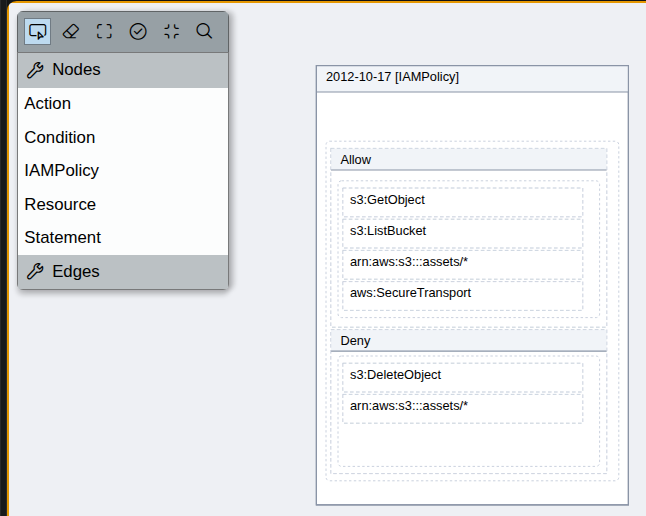
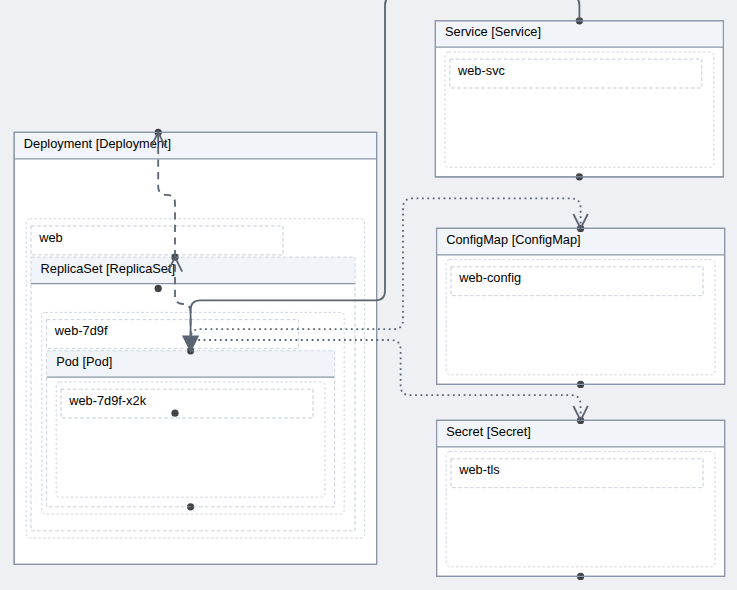
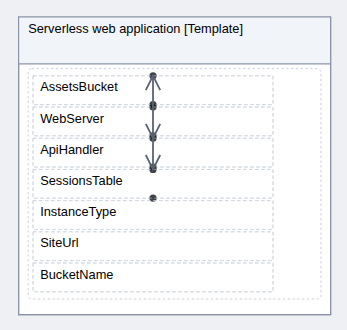
dependsOn.Each one is a few authored files on the same runtime. Yours is the next.
metaforge is in active development. Explore the project, try the authoring editors, and generate your first language.